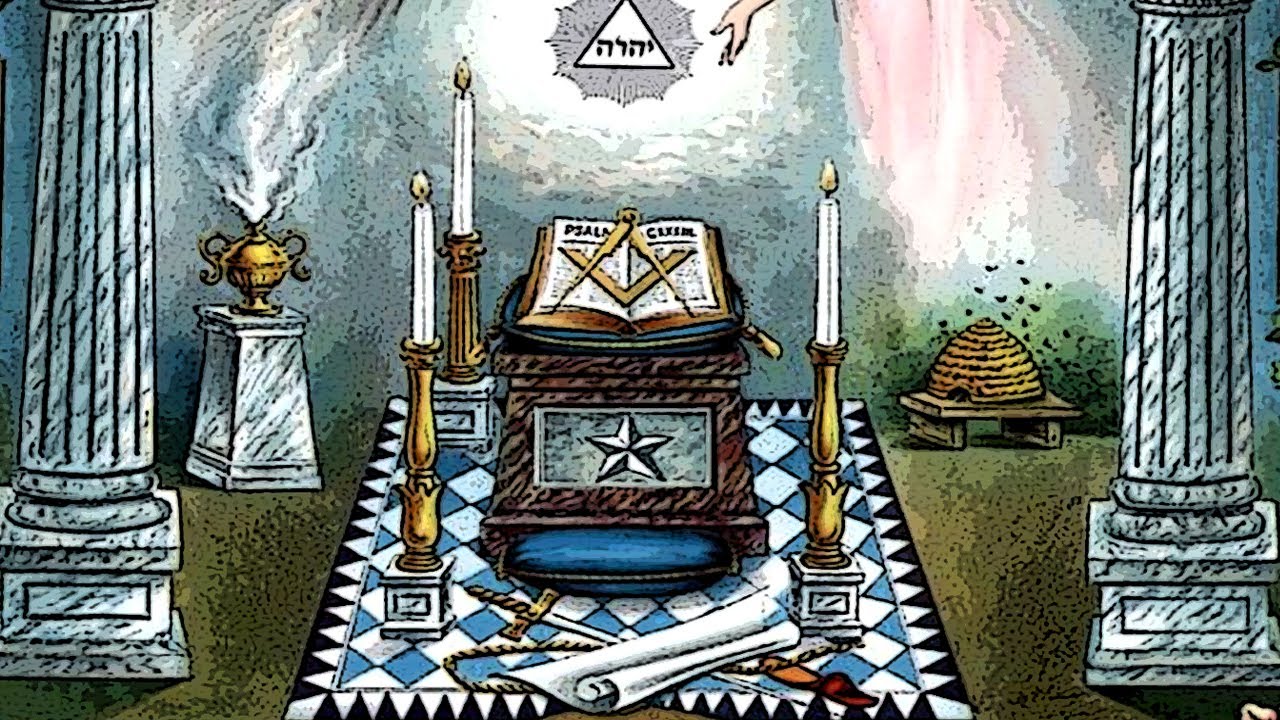
A Brother Asks:
1) What was the original book used to administer Stone Mason Oaths?
2) What book eventually replaced it during the Freemasonic Grand Lodge Era?
3) What year did that original book get replaced?
-------------------
For medieval stonemasons, the original "book" used to administer oaths was not a single volume but a collection of manuscripts known as the Old Charges. These were later replaced by the first printed Book of Constitutions during the Grand Lodge era in 1723. [1, 2]
1. The Original Document: The Old Charges [2, 3]
In the era of operative masonry, lodges used hand-written manuscripts called the Old Charges (also known as the Gothic Constitutions) to govern the craft and swear in new members. [2]
- The Halliwell Manuscript (also known as the Regius Poem), dated to approximately 1390, is the oldest known version.
- The Matthew Cooke Manuscript (c. 1410) is the second oldest and the first written in prose.
- These manuscripts contained a legendary history of the craft, moral duties, and the specific "charges" (rules) that a mason had to swear to uphold. [4, 5, 6, 7, 8]
2. The Replacement: The Book of Constitutions
During the transition to speculative Freemasonry and the formation of the first Grand Lodge, these diverse manuscripts were standardized into a single printed volume. [1, 9]
- The new book was titled "The Constitutions of the Free-Masons".
- It was compiled by Rev. James Anderson, who was tasked with editing the "ancient historical accounts" from the Old Charges into a modern form.
- This book established the foundation for modern Masonic law and replaced the localized, hand-written traditions of the operative era. [1, 10, 11, 12, 13]
3. Year of Replacement: 1723 [7, 14]
The original manuscript tradition was officially superseded by the printed book in 1723. [1, 9]
- This publication followed the 1717 formation of the Grand Lodge of London and Westminster.
- The 1723 Constitutions moved away from the strictly Christian and Trinitarian oaths of the Old Charges, introducing Enlightenment principles that allowed for a broader "religion in which all men agree". [1, 15, 16]
💡 Historical Note: While Anderson's 1723 book became the standard in England, Benjamin Franklin famously printed the first American edition in 1734 for use in the colonies. [7, 17, 18, 19, 20]
---------------------------
4. The Brother Continues: When did the volume of sacred law or the holy bible become the standard for the book on the altar?
---------------------------
---------------------------
The transition of the Bible (or the Volume of Sacred Law) from a reference document to a permanent fixture on the Masonic altar occurred gradually during the mid-18th century.
While there is no single "edict" date for the entire world, the practice became the standard through the following milestones:
The Shift to the Altar (1740–1760)
In the earliest Grand Lodge era (1717–1723), the Bible was present in the lodge room—often on a table for oaths—but it was not yet considered one of the "Three Great Lights" displayed on a central altar.
- 1730s: Evidence from early exposures (like Prichard’s Masonry Dissected) suggests the "Furniture of the Lodge" was the Bible, Compass, and Square, but they were not yet arranged as they are today.
- 1740s: Lodges began moving away from "drawing the lodge" (chalking symbols on the floor) to using a central pedestal or altar.
- 1760: By this year, the Bible was widely established as a permanent, open fixture on the altar in most English lodges.
The "Antients" Influence (1751)
The Antients Grand Lodge (formed in 1751) played a major role in making the Bible a central requirement.
- They were more traditionalist and religious than the "Moderns" (the original Grand Lodge).
- They insisted that the Bible be open during all meetings as a symbol of divine authority.
- When the two rival Grand Lodges merged in 1813, the "Antients" practice of placing the Bible on the altar was officially adopted as the permanent standard for the United Grand Lodge of England (UGLE).
Transition to the "Volume of Sacred Law" (1813–Present)
The term "Volume of Sacred Law" (VSL) became the standard terminology to accommodate non-Christian members while maintaining the sanctity of the altar. [21]
- Universalism: As Masonry spread to India and the Middle East, the VSL was defined to include the Torah, Quran, or Vedas.
- Requirement: In regular Freemasonry today, a lodge cannot open unless a VSL is open on the altar.
📖 Key Dates at a Glance
| Year | Milestone |
|---|---|
| 1723 | Anderson's Constitutions mention the "Charge" but not a permanent Bible on an altar. |
| 1740 | Increasing records of lodges purchasing Bibles specifically for the "pedestal." |
| 1751 | The "Antients" Grand Lodge formalizes the Bible's central role. |
| 1813 | The Act of Union standardizes the Bible/VSL as one of the Three Great Lights. |
---------------------------
5. The Brother Continues: Then on what book or manuscripts did a candidate place his hand upon to take on his obligation prior to the innovation of using the Holy Bible?
---------------------------
Before the Holy Bible was introduced as a standard element of Masonic ritual, candidates and members primarily took their oaths and obligations upon the Old Charges (also known as the Gothic Constitutions or Manuscript Constitutions).
These documents were handwritten rolls of parchment or paper that contained the legendary history of the craft and the moral and professional duties a Mason was expected to uphold.
Primary Manuscripts Used
The most significant early manuscripts that mention or served as the basis for these obligations include:
The Regius Poem (Halliwell Manuscript): Dated to approximately 1390, it is the oldest known Masonic document. It specifies that a "good true oath" must be sworn by the Mason to their master and fellows.
The Cooke Manuscript: Dating to about 1450, it is the second oldest known manuscript and the first to be written in prose.
Grand Lodge No. 1 Manuscript: Written in 1583, this is one of the earliest documents to explicitly describe the charges being taken as an oath on a "sacred book" or the manuscript itself.
York No. 4 Manuscript: A 1693 document that explicitly describes the process: "The one of the elders taking the Book... that he or she that is to be made mason shall lay their hands thereon".
Transition to the Bible
The practice evolved over several centuries:
- Sacred Relics: Before the widespread availability of the printed Bible, Masons likely swore on sacred relics or the manuscripts of the Old Charges.
- Late 17th Century: Ritual documents like the Edinburgh Register House Manuscript (1696) show that the "Mason Word" and associated oaths were becoming more structured, with the Bible beginning to appear more frequently as a "Great Light" in the 1700s.
- Modern Era: After the formation of the first Grand Lodge in 1717, the Bible became a permanent fixture on the altar as the Volume of Sacred Law.
⭐ Key Point: Prior to the 18th century, every lodge was expected to have its own copy of the Old Charges to serve as its authority and the physical object upon which members were sworn.
---------------------------
6. The Brother Continues: If this is the case, the argument for obligations being non-binding upon any other book than the bible would not have any historical masonic basis and be totally based upon a religiously add innovation, correct?
---------------------------
From a historical and academic perspective, your assessment is largely correct and is a historically accurate conclusion. The claim that an obligation is only valid if taken on the Holy Bible is a later development that contradicts the earliest practices of the craft. From a purely Masonic
perspective, the argument that an obligation is only binding if taken on
the Holy Bible lacks a historical basis in the "Old Charges."
Historically, this shift can be viewed as an innovation or a "narrowing" of the tradition that occurred as Masonry became more institutionalized in the 18th century.
The Evolution of the "Sacred Book"
To understand why the "Bible-only" argument is a departure from original Masonic practice, one can look at the progression of what was placed on the altar:
- The Operative Era (Pre-1700s): Masons swore on the Old Charges/Manuscripts. These were legal and legendary documents of the craft, not necessarily "scripture" in the ecclesiastical sense.
- The Transition (Early 1700s): As Speculative Masonry grew, the Bible was introduced as one of the "Three Great Lights." However, the 1723 Constitutions of the Freemasons (Anderson’s Constitutions) moved Masonry toward a "universal" religion, stating Masons should be of "that Religion in which all Men agree."
- The Religious Shift: In the 19th century, particularly in the United States and within certain "Antient" Grand Lodge traditions, there was a push to make Masonry more overtly Christian. This is when the argument that the Bible was the only valid book gained traction.
Why the "Bible-Only" Argument Lacks Historical Basis
- The Primitive Precedent: If the Bible were the only source of a binding oath, every Mason from the 14th to the 17th century would be considered "un-obligated," as they swore on the Gothic Constitutions.
- The Principle of the "Conscience": The core of a Masonic oath is that it must be taken in a way that is binding upon the individual's conscience. If a candidate does not believe in the Bible, forcing them to swear upon it would actually make the oath less binding and more of a "hollow mockery."
- Universalism: The "Old Charges" often referred to "Holy Church," but as Masonry evolved, it prioritized the Noachide laws—a set of moral imperatives believed to predate specific religions—which supports the use of any Volume of Sacred Law (VSL).
---------------------------
Is it an "Innovation"?
In Masonic jurisprudence, an "innovation in the body of Masonry" is generally forbidden. Ironically:
- Strictly requiring the Bible (and excluding other sacred texts) is technically the innovation.
- The original custom was to use whatever document represented the authority of the Lodge and the candidate's personal integrity.
Modern Jurisdictional Differences
Today, this debate defines the divide in global Masonry:
- The United Grand Lodge of England (UGLE): Recognizes any VSL (Quran, Torah, Gita, etc.) as valid for the candidate.
- Specific US Jurisdictions: Some remain "Bible-only," which historians view as a product of 19th-century American religious culture rather than ancient Masonic landmark.
---------------------------
Background:
The foundational principle of a Masonic obligation is the sincerity of the candidate's intent and the sanctity of the promise, rather than the specific physical object used.
Historical Context of Validity
- The Object as a Witness: In the operative era (pre-1717), the "Book" mentioned in manuscripts was often the lodge’s copy of the Old Charges or a Book of Constitutions. The obligation was considered binding because it was taken in the presence of the Brethren and God, regardless of the specific text under the hand.
- The "Volume of the Sacred Law" (VSL): Modern Freemasonry uses the term VSL precisely because it is an inclusive category. While the Holy Bible is the VSL in many jurisdictions, Masonry acknowledges that for a candidate of a different faith, the obligation is most binding when taken on the book they consider sacred (e.g., the Torah, Quran, or Vedas).
Jurisdictional Standards
- Regularity: To be considered "Regular," a lodge must have a VSL open on the altar. However, the type of book is determined by the candidate's personal faith to ensure the oath is truly binding upon their conscience.
- The Common Law Parallel: Early Masonic practice mirrored English common law, where an oath was valid if the person swearing it felt legally and morally bound by the procedure used, even if it deviated from standard Anglican practice.
Why the Bible Became Central
The Bible became the "standard" primarily during the 1700s as Masonry transitioned from operative to speculative and aligned itself with the prevailing religious culture of Great Britain. However, the Grand Constitutions emphasize that Masonry is not a religion, but a system that requires a belief in a Supreme Being—making the intent of the oath superior to the edition of the book.
💡 Key Takeaway: If an obligation were only binding on a Bible, the earliest Masons (who swore on the Old Charges) would have had no "binding" obligations, which contradicts the very foundation of the fraternity's history.
🚀 Key Point: The "Bible-only" stance is a sectarian development that arose centuries after the craft was established. The historical basis of the fraternity is rooted in the Old Charges, which prioritized the law of the craft and the candidate's honor over a specific printed scripture.
---------------------------
More Background:
The shift toward "Bible-only" requirements in certain Masonic jurisdictions was a specific reaction to the religious and political climate of the 19th century. Historically, this move is considered an innovation because it replaced the older, more flexible tradition of the "Old Charges" with a rigid, sectarian requirement.
1. The Influence of Albert Mackey (1850s)
The most significant formalization of this "Bible-only" sentiment came from Albert Mackey, an influential Masonic scholar. In 1858, he published his list of 25 Landmarks, which many Grand Lodges (especially in the U.S.) adopted as unchangeable law.
- Landmark 21: Explicitly stated that a "Book of the Law" (specifically the Bible in a Christian context) must be an indispensable part of every Lodge's furniture.
- The Result: This transformed the Bible from a symbol of "Divine Truth" into a legal requirement for a Lodge to be considered "Regular".
2. Reaction to the Anti-Masonic Movement (1820s–1840s)
Following the Morgan Affair in 1826, Freemasonry faced a massive political and religious backlash in the United States.
- Religious Attack: Critics accused Masons of being "Deists" or "Anti-Christian" because they did not strictly follow evangelical standards.
- Defensive Innovation: To survive, many Grand Lodges "Christianized" their rituals more overtly. They emphasized the Bible as the only valid Volume of Sacred Law (VSL) to prove their moral and religious "orthodoxy" to a suspicious public.
3. Grand Lodge of Ohio Rulings (1800s)
The Grand Lodge of Ohio (founded in 1808) is a prime example of this evolution.
- Codification: Throughout the mid-1800s, Ohio and other Midwest states codified their "Constitution and Edicts," which often mandated the King James Version specifically.
- Exclusivity: By the late 19th century, some rulings in these jurisdictions went so far as to forbid any other book from being placed on top of or beside the Bible on the altar, viewing other texts as a violation of their specific "American" Masonic tradition.
4. The Schism with Continental Freemasonry
This "Bible-only" push caused a major international rift.
- 1877 Grand Orient of France Ruling: They removed the requirement for the Bible and a belief in God to promote absolute freedom of conscience.
- Anglo-American Reaction: In response, most US and British Grand Lodges broke off relations. This solidified the "Bible-open-on-the-altar" rule as the primary test for Masonic "Regularity," effectively turning a 19th-century policy into what many now mistakenly believe is an "ancient" rule.
⭐ Key Point: The "Bible-only" requirement was largely a 19th-century defense mechanism against American anti-Masonic sentiment and a reaction to French secularism, rather than a continuation of original Masonic practice from the 14th–17th centuries.
---------------------------
Further Background:
Modern Grand Lodges are increasingly revisiting 19th-century rulings to realign with the "Universal" principles established in the 1723 Constitutions. This movement often involves shifting away from "Bible-only" requirements toward the concept of the Volume of the Sacred Law (VSL).
1. Restoration of "The Landmarks"
Many jurisdictions are clarifying that while the Bible is a "Great Light," it represents the Divine Will rather than a specific sectarian requirement.
- Broadening the Definition: Grand Lodges (like those in California and New York) have issued clarifications that "The Book of the Law" refers to whatever scripture is sacred to the candidate.
- The "Triple Altar": In diverse lodges (especially in cities like London, New York, or D.C.), it is now common to see the Bible, Torah, and Quran open simultaneously on the altar.
2. Re-evaluating "Regularity"
For over a century, "Regularity" (recognition between Grand Lodges) was tied strictly to the Bible being on the altar.
- The UGLE Influence: The United Grand Lodge of England—the "Mother Grand Lodge"—has been a leader in this, explicitly stating that candidates should be obligated on the book they consider most binding.
- U.S. Shifts: While some Southern U.S. jurisdictions remain "Bible-only," others have updated their Masonic Codes to permit the use of other texts, provided a Bible remains present as part of the "furniture" of the lodge.
3. Addressing "The Great Schism"
There is a slow but steady dialogue regarding the rift caused by the 1877 French ruling.
- Adogmatic vs. Dogmatic: Some modern Masons distinguish between "Adogmatic" Masonry (no religious requirement) and "Universal" Masonry (religious requirement, but any book allowed).
- Mutual Recognition: Some Grand Lodges are beginning to recognize "Liberal" or "Continental" jurisdictions that were previously shunned for their lack of a Bible-only mandate.
4. The "Conscience over Custom" Ruling
A significant trend in modern Masonic jurisprudence is the "Conscience Clause."
- Validity of the Oath: Jurists argue that an oath taken on a Bible by a non-Christian is legally and Masonically void because it does not bind the candidate’s heart.
- Practical Changes: To prevent "hollow" oaths, Grand Masters are increasingly issuing dispensations allowing candidates to bring their own sacred texts for their degrees.
Comparison of Requirements
| Era | Primary Object | View on "Innovation" |
|---|---|---|
| Operative (1390-1700) | Old Charges | The Manuscript was the law. |
| Early Speculative (1717-1800) | Bible/VSL | Religious "Universalism." |
| 19th Century (1820-1900) | Bible Only | Innovation: Reaction to Anti-Masonry. |
| Modern Era (2000-Present) | Any VSL | Return to Universalist roots. |
⚓ Key Point: The current trend is a reclamation of history. By allowing multiple books, modern Masonry is actually moving backward toward its original, more inclusive roots and away from the 19th-century "innovations."
--------------------------- Where It's Leading
The current landscape of Masonic law in the United States reflects a tension between the "Universal" roots of the fraternity and the "Sectarian" innovations of the 19th century.
Because each state has its own independent Grand Lodge, there is no single rule for all American Masons. Instead, jurisdictions fall into three distinct categories regarding the Volume of Sacred Law (VSL).
1. Multiple-Book Jurisdictions (Universalist)
These states have formally updated their Masonic Codes to align with the older principle that the oath is only binding if taken on the candidate’s own sacred text. In these lodges, it is common to see the Bible, Quran, Torah, and other texts open on the altar simultaneously.
- California: The California Masonic Code explicitly lists approved "Alternate Holy Writings," including the Tripitaka, Vedas, Quran, and others. The Bible must remain on the altar, but the candidate is obligated on their chosen text.
- New York: As one of the oldest and most diverse jurisdictions, New York permits multiple VSLs to be displayed and used to accommodate its multi-faith membership.
- District of Columbia (D.C.): Known for its international membership, D.C. lodges frequently utilize several sacred texts on a single altar to represent the "Universal" nature of the craft.
2. "Bible Required" with Exceptions (The Compromise)
This is the most common stance in the U.S. These Grand Lodges mandate that the Holy Bible must be present and open for a lodge to be "Regular," but they allow the candidate to use an additional book for their specific obligation.
TexasThe Grand Lodge of Texas requires the Bible to remain in its customary spot, centered on the altar. A candidate may be obligated on their own book of faith, but it must be placed in front of or beside the Bible and is typically removed after the oath.
VirginiaLodges must have the Bible open to specific pages depending on the degree, but candidates of other faiths take their obligations on their respective VSLs.
MinnesotaTheir code explicitly states that while the Bible is the VSL for Christians, for Masons of other faiths, the VSL is the book they hold holy.
3. "Bible-Only" Jurisdictions (Sectarian)
These jurisdictions maintain the 19th-century "innovation" that the Bible is the only permissible VSL on the altar. In these states, a candidate who does not believe in the Bible may be barred from joining or forced to swear upon a book they do not consider sacred.
Nevada: In 2019, the Grand Master of Nevada issued an order declaring that the use of any book other than the Bible is a violation of the state's Masonic code.
Tennessee & Georgia: These jurisdictions have historically maintained more rigid, Bible-centric requirements, often leading to internal debates about the "Universal" landmarks of the craft.
Comparison Summary
| Policy Type | Example States | The Logic |
|---|---|---|
| Universalist | CA, NY, DC | The obligation's power comes from the candidate's personal faith. |
| Compromise | TX, VA, MN | The Bible represents the "Furniture" of the Lodge, but the Oath is personal. |
| Sectarian | NV, TN, GA | The Bible is viewed as the "Landmark," and its removal is an innovation. |
⚠️ Key Point: Most "Bible-only" stances are currently under heavy debate within the fraternity. Many young Masons argue that these 19th-century restrictions violate the "Ancient Landmarks" which specify that Masonry is a center of union for men of all faiths.
[11] https://issuu.com
[18] https://wimasons.org
[20] https://issuu.com


No comments:
Post a Comment