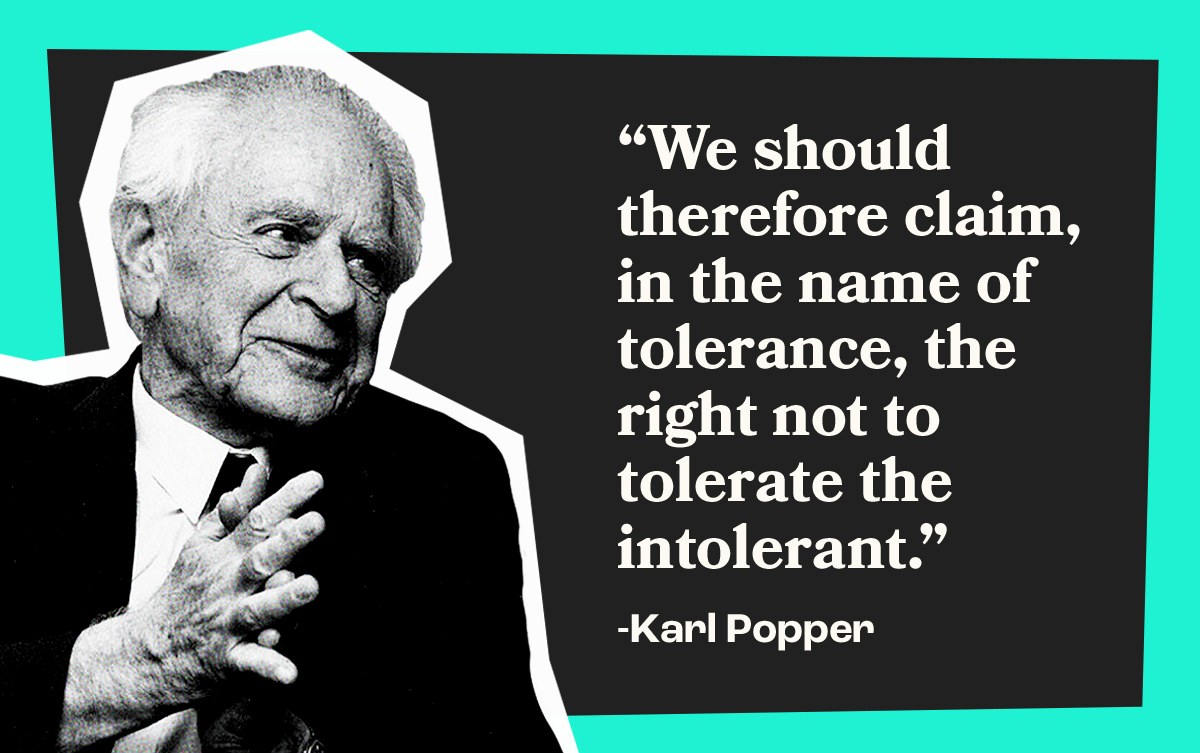
A Brother Asks: Have you ever read or heard of the tolerance paradox?
Coach: Yes, and the logic of it is flawed.
Brother: Please explain.
Coach: The paradox's construction breaks down logically through equivocation on the word "tolerance" and a hidden contradiction in its starting premise.
When you look strictly at how the paradox is built, the contradiction is not a genuine mystery of logic. It is a flaw in how the terms are defined at the outset.
1. Equivocation (Shifting Definitions)
• The Shift: The argument starts by defining tolerance as non-interference with ideas. It then silently shifts to defining tolerance as permitting the use of force.
• The Result: Allowing someone to hold an unpopular belief is completely different from allowing someone to physically silence or harm others. Blending both actions under the single word "tolerance" creates a fake contradiction.
2. Self-Contradictory Premise (Universal Quantification)
• The Flaw: The paradox assumes that "true" tolerance must be absolute and without limits.
• The Result: By definition, tolerance requires a boundary—you only "tolerate" things you object to, within a peaceful framework. Claiming that tolerance must include the destruction of tolerance builds a self-canceling rule directly into the premise, much like asking if an all-powerful being can make a rock too heavy to lift.
3. Category Error
• The Flaw: The construction treats tolerance as a static, unconditional moral absolute rather than a reciprocal social rule.
• The Result: In logic, a rule that governs how two parties interact cannot apply when one party refuses to participate in the interaction. Treating a conditional rule as an unconditional law manufactures the paradox out of thin air.
In short, the paradox only exists because its construction forces a conditional social rule to act like an unconditional logical absolute. Once you define tolerance accurately, the paradox collapses.


No comments:
Post a Comment